C-Stores Trend Report
US Signals Vs Latam Reality
What it is
A case about why actionable-looking trend reports still fail to produce decisions in LATAM retail.
What I did
Contributed to building a multi-layered trend report from NACS inputs and clarified the structural gap between insight and decision.
Skills
Sensemaking, structured analysis (STEEP), synthesis with AI, system diagnosis.
Why it matters
Shows that without prioritization, ownership, and timing, even operational recommendations remain passive.
Context & Uncertainty
A major FMCG company produced global trend reports based on inputs from the NACS event in the US and distributed them to LATAM key accounts such as OXXO and 7‑Eleven. The expectation was that translating global signals into regional recommendations would support local decisions.
The project strengthened this premise by increasing analytical depth. Each trend moved beyond consumer insight to include technology, market dynamics, competitor behavior, and operational implications. The report also included concrete “how to land in LATAM” guidance and examples from real companies.
Despite this, the team had no visibility into how clients used the report. There was no access to planning cycles, budgets, or ownership on the client side. The artifact was designed to inform decisions but remained disconnected from the environment where decisions were actually made.
The uncertainty shifted from identifying relevant trends to understanding why a report that already included recommendations still did not lead to action.

Problem Tension
The work exposed a tension between actionability and decision. The report provided recommendations such as testing new food occasions, implementing checkout technologies, and exploring new store formats. These suggestions were concrete at an operational level.
At the same time, they were generic at a strategic level. Multiple trends suggested multiple directions, all plausible, none enforced. This was not a gap in execution, but a consequence of the role of the project. The team was responsible for producing a report that could be distributed across multiple clients, without access to their specific contexts, constraints, or decision processes.
As a result, the report expanded the set of possible actions instead of reducing it. It enabled interpretation but did not require commitment. Decision-making demands exclusion, prioritization, and ownership. These constraints were outside the scope of the project.
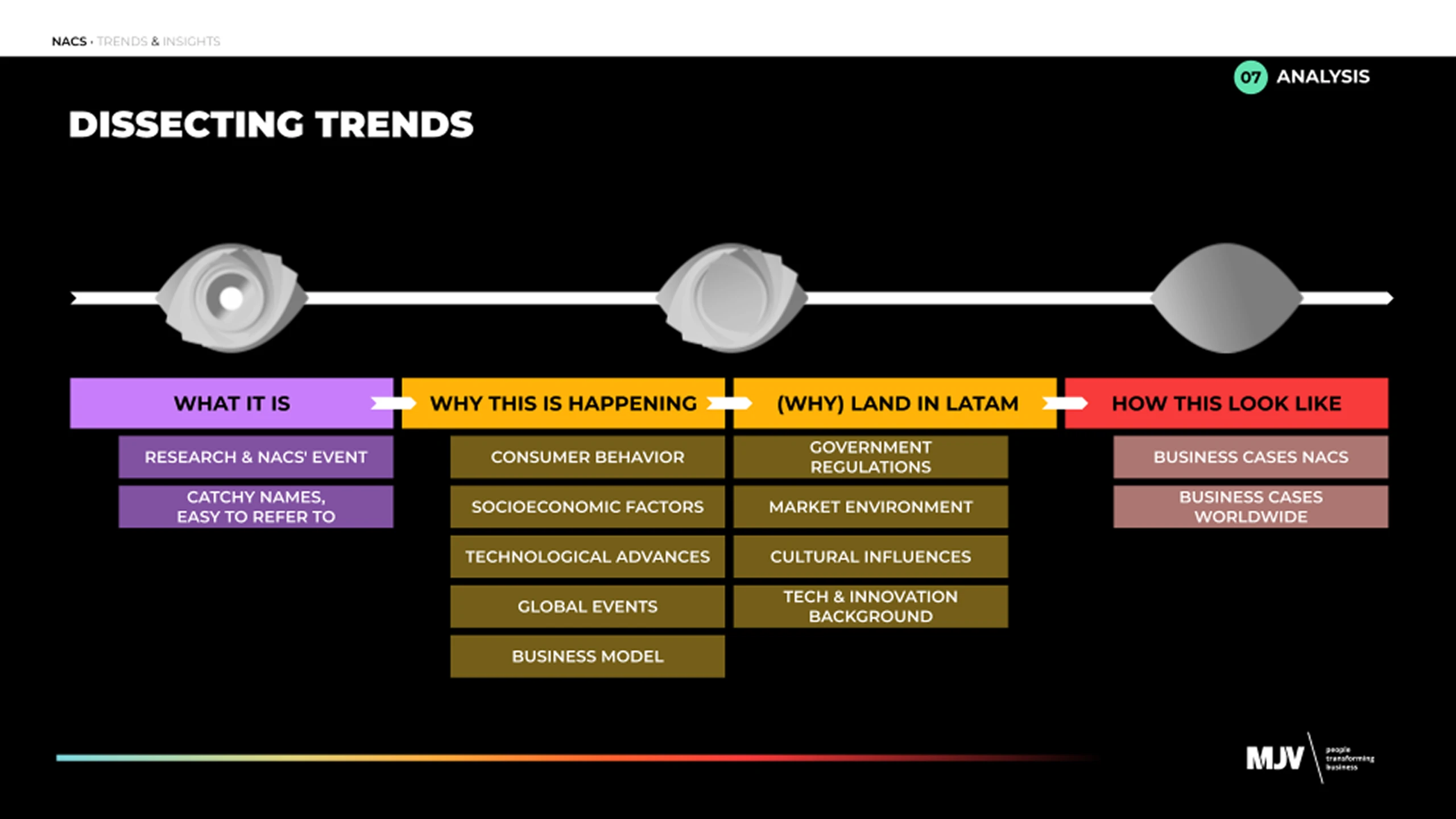
Architecture
The team focused on building a robust and interpretable structure for trends. Each trend was analyzed through multiple lenses, including consumer behavior, technological enablers, market dynamics, competitor actions, and operational implications such as store experience, supply chain, and pricing. External forces were structured using STEEP to explain why each trend exists.
AI tools supported the process. Rewind AI enabled capture and transcription of event sessions, allowing distributed analysis. Perplexity AI expanded desk research and synthesis across sources.
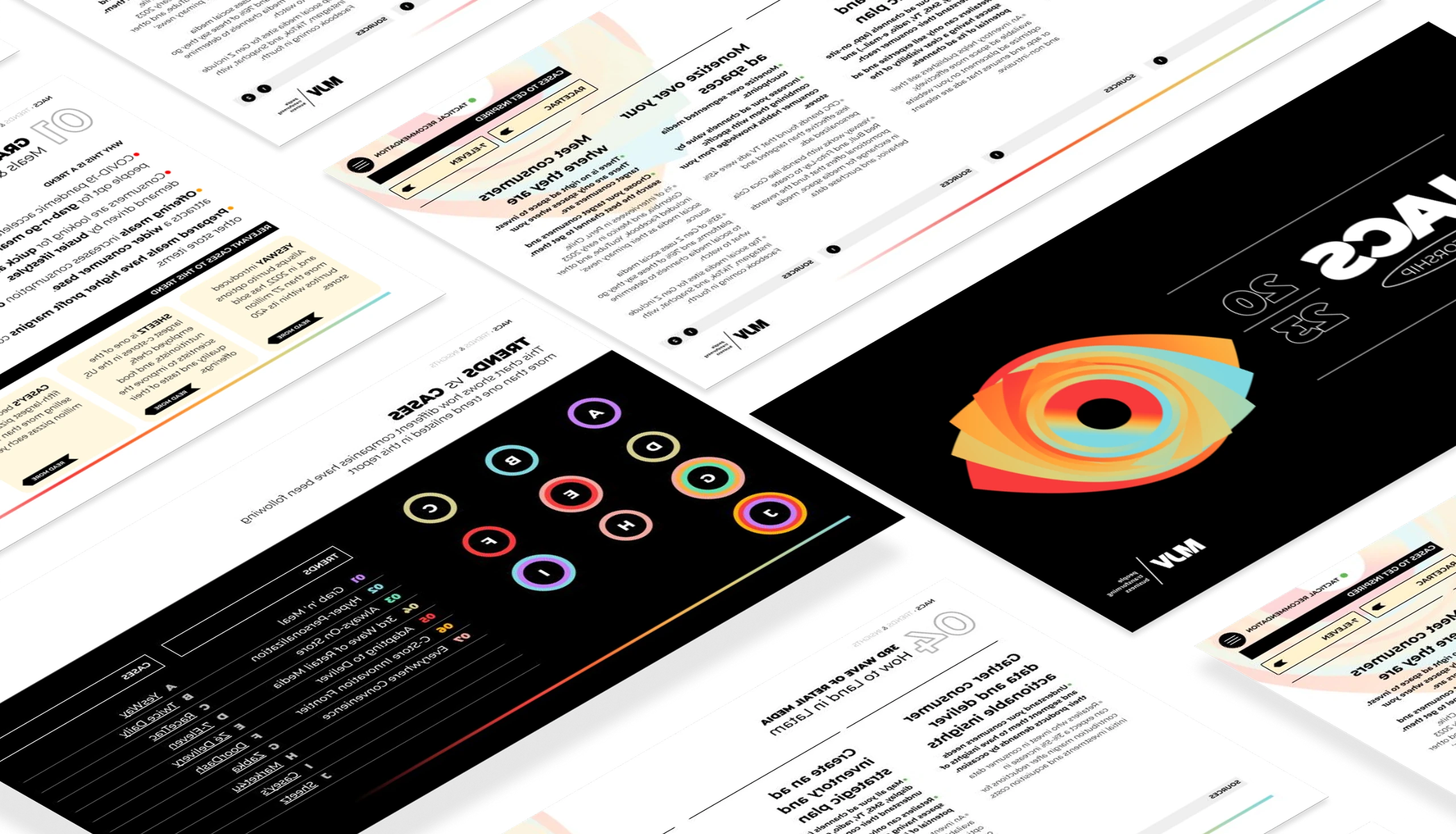
The output combined explanation and application. Trends included rationale, supporting data, business cases, and localized recommendations. This created a report that was coherent, detailed, and apparently actionable. However, the architecture stopped at interpretation and recommendation. It did not include mechanisms to decide between competing directions.
Decisions & Trade-offs
The project was structured to maximize breadth and applicability across multiple clients. Given the lack of access to specific business contexts, the team did not define prioritization criteria, explicit recommendations to choose between trends, or ownership for execution. This was not an omission in execution but a consequence of how the work was scoped. The report needed to remain general enough to be relevant to different accounts.
The trade-off is clear. By preserving flexibility and completeness, the report avoided being wrong for any specific client. At the same time, it could not be directly used by any specific client. Without prioritization, all trends remain equally valid. Without ownership, no action is triggered. Without timing, no urgency is created.
Impact
The immediate outcome was a high-quality report with strong analytical depth and clear operational recommendations. There is no evidence of consistent adoption or decision-making driven by the report. It functioned as a reference artifact rather than a decision instrument.
The key impact is diagnostic. The project makes visible a structural gap: organizations do not act on trends because the missing layer is not information, but decision. Even when insights are well-structured and recommendations exist, action requires prioritization, ownership, and integration into planning cycles.
Long-term Effect
This project reshaped how I approach insight-driven work. The limitation is not the quality of the report, but the absence of decision pressure. Reports explain the world. Decisions change it.
A minimal decision layer would need to sit between insight and action. This layer would include explicit prioritization, constrained choices, defined ownership, and integration with planning moments. Without these elements, increasing analytical depth only increases optionality and reduces the likelihood of action.